The Lotus – a Symbol of Purity, Balance and Inner Path
1. What is the Lotus as a Symbol
The lotus is one of the most deeply revered flowers in Eastern cultures. Its power is not in its external beauty, but in the way it grows – from dark, muddy water to light, without losing its purity.
This natural movement turns the lotus into a symbol of inner growth, awareness and balance. It does not deny the environment from which it originates, but uses it as a basis. That is why the lotus is often perceived as an image of the human path – life in the world, without losing inner clarity.
2. The Lotus in India, Sri Lanka and Thailand
India
In India, the lotus is a sacred flower, associated with pure consciousness and divine order. It is present in Hindu philosophy as a symbol of spiritual clarity, harmony and inner wholeness. Many deities are depicted on a lotus flower – not as an ornament, but as a sign of conscious presence and connection between the earthly and the spiritual.
Sri Lanka
In Sri Lanka, the lotus is part of daily spiritual practice. It is offered in temples as a gesture of gratitude, humility and inner intention. Here, the lotus is not an ideal, but a path – a reminder that inner balance is achieved gradually, with patience and attention.
Thailand
In Thailand, the lotus is an integral part of the Buddhist tradition. It is present in prayers, meditations and rituals as a symbol of enlightenment. The lotus embodies the possibility of a person to remain rooted in reality, but turned towards the light – with clarity and peace.
3. Why is a lotus donated to temples
Donating a lotus to temples is not a decorative gesture. It is an expression of inner intention.
The lotus is offered because:
it symbolizes purity of thought
it carries a message of humility and balance
it reminds of transience and conscious presence
The lotus has no thorns and no protection – it is completely open. It is this openness that makes it a powerful spiritual symbol. In Eastern traditions, it is believed that the lotus creates harmony between body, breath and consciousness – not through force, but through a soft presence.
4. The aroma of the lotus
The aroma of the lotus is subtle, light and watery.
It does not dominate or intrude. It unfolds gradually and remains calm – like a breath that slows down the rhythm.
In aromatherapy, the lotus is associated with:
inner balance
softness and calming
harmony between the senses
This is an aroma suitable for moments of slowing down, meditation and personal rituals.
5. Lotus and the Philosophy of Tuberose
The philosophy of Tuberose follows the same understanding that the lotus brings to Eastern cultures – that true value is not imposed, but unfolds with time and attention.
Lotus and tuberose share a common depth.
Both are flowers that do not reveal themselves immediately. Their aromas are not noisy – they are present, lingering and remembered.
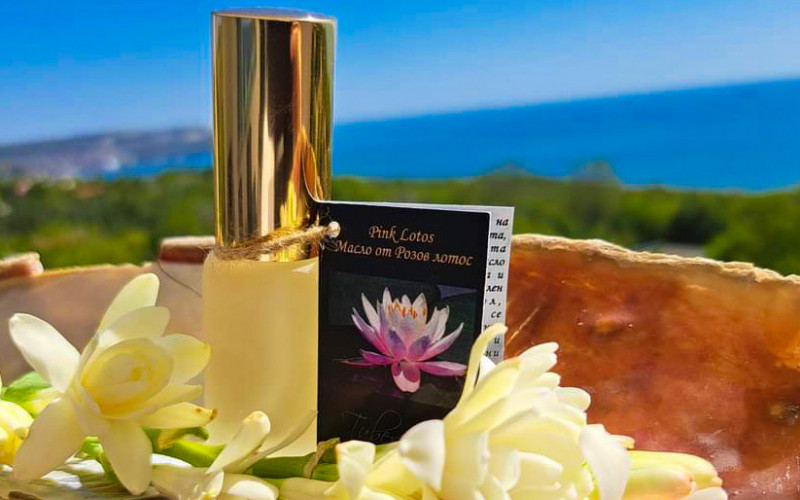
That is why Tuberose Pink Lotus Oil was created as a fragrance for moments of slowing down – for personal rituals, quiet care and a return to inner balance. It does not dominate, but accompanies. It does not promise change, but offers presence.
6. Lotus as a choice
Choosing lotus is not just a choice of fragrance.
It is a choice for awareness, softness and inner order.
In a world that constantly demands, the lotus reminds us that sometimes the greatest power lies in the calm unfolding – at the right moment.
Conclusion
The lotus is much more than a flower. It is a symbol of a journey, of mindful presence and of a quiet heart. In the world of Tuberose, this symbol lives through fragrances and oils that create a space for inner peace and harmony, rather than noise and pressure.