Frankincense Oil – The Ancient Scent of Silence, Balance and Inner Strength
Day After Day Tuberose
There are scents that are not worn as perfume.
They are felt as a presence.
Frankincense oil is such a scent – used for millennia in temples, healing practices and rituals for inner balance. Today it finds its place in the modern world as a natural remedy for aromatherapy, skin care and emotional balance.
In this article you will find everything about frankincense oil – its origin, history, symbolism, benefits, uses and why it holds a special place in the Tuberose collection.
What is frankincense oil
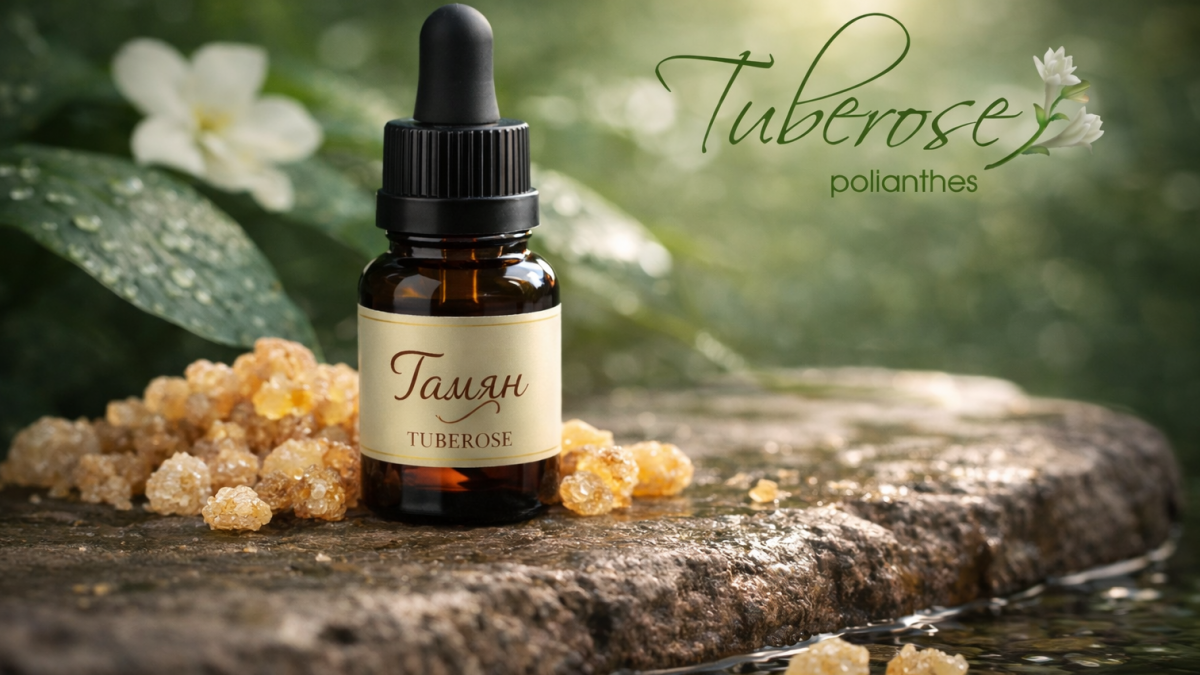
Frankincense oil is extracted from the aromatic resin of trees of the genus Boswellia, which grow in dry and harsh regions of the Arabian Peninsula, East Africa and India.
When the bark of the tree is carefully injured, the resin begins to flow from it. After contact with air, it hardens and forms the characteristic grains of incense, known since ancient times as the tears of the earth.
From this resin, frankincense essential oil is obtained through steam distillation - a concentrated extract with a deep, warm, resinous and slightly balsamic aroma.
Origin and history of incense
Frankincense is among the most valuable natural substances in human history. In ancient times, it was more expensive than gold and was traded along special routes connecting Egypt, Mesopotamia, India and the Mediterranean.
Incense in ancient civilizations
In ancient Egypt
Frankincense was used in embalming, temple rituals and healing practices. The Egyptians believed that its aroma purified the soul and prepared it for eternal life.
In the Christian tradition
Frankincense is one of the three gifts offered at the birth of Christ. It symbolizes prayer, the divine presence and the connection between the earthly and the heavenly.
In India and the Ayurvedic tradition
Incense has been used to calm the mind, support breathing, and achieve inner balance.
For millennia, incense has remained a scent of the sacred and silence.
Symbolism and Spiritual Meaning of Incense
Incense is not an overpowering scent.
It does not dominate – it is present.
Symbolizes:
purification and protection
inner strength and stability
awareness and deep peace
connection with the higher self
Therefore, frankincense is used for:
meditation
prayer
evening rituals
moments of solitude and returning to oneself
Benefits and properties of frankincense oil
Benefits for the skin
Frankincense oil is valued in natural cosmetics for its ability to:
support skin regeneration
smoothes fine lines
improves elasticity
soothes sensitive and mature skin
It is often called the oil of maturity and wisdom.
Benefits for the mind and emotions
calms the nervous system
reduces tension and stress
supports concentration
creates a feeling of clarity and inner peace
Frankincense oil in the Tuberose collection
In Tuberose, incense is not just a scent.
It is the foundation, the center and the depth.
The Tuberose collection was created as a path –
from the ethereal floral aromas
to the earthy, stable and internal.
Incense takes the place of balance – a scent that gathers, grounds and supports.
How to use frankincense oil – a “Day after Day” ritual
Evening, on clean skin:
1–2 drops of oil
slow movements
a few deep breaths
No rush.
No expectation.
Just presence.
Discover frankincense oil from Tuberose
Discover frankincense oil https://tuberosepolianthes.com/produkti/kozmetika/maslo-ot-tamyan from the Tuberose collection – a scent for silence, balance and deep inner presence.
Frequently asked questions about frankincense oil
What are the main benefits of frankincense oil?
Frankincense oil supports skin regeneration, calms the mind and creates a feeling of inner balance.
Is frankincense oil suitable for daily use?
Yes, used in small amounts, it is suitable for daily rituals, especially in the evening.
Can frankincense oil be used for meditation?
Yes. It is one of the most suitable aromas for meditation, silence and concentration.
Frankincense oil does not promise.
It stays.
Day after day.
Drop after drop.
Silence after silence.
Tuberose – when the aroma is a path, not a product.