Growing, Care, Fertilizing and Blooming Month by Month
Polyanthes Tuberose (Polianthes tuberosa) is one of the most fragrant and impactful flowers in the world. Its deep, rich aroma unfolds most strongly in the evening, which has earned it the name Queen of the Night. In order to develop properly, form strong plants and bloom continuously, Tuberose requires a precise annual rhythm, proper starting fertilization and good planting planning.
Many of the problems in growing – lack of flowering, weak plants or small bulbs – are the result not of the variety, but of missed fertilization, incorrect planting time or hasty removal.
This annual Tuberose Polyanthes calendar has been created as a professional guide, tailored to the climatic conditions in Bulgaria, and covers all key stages – from early awakening to late flowering.
January – February
Rest and early awakening in a pot
In winter, Tuberose bulbs are dormant and are usually stored in a dry, dark and airy place at 10–15°C.
🔹 Important addition:
As early as February, Tuberose can be deliberately planted in a pot in a warm and bright place to wake up earlier. This is done for the purpose of:
earlier start of vegetation
earlier flowering
extending the season
The pots are kept warm (above 18°C), and watering is moderate.
March
Beginning of the active season
March marks the real beginning of the Tuberose season.
the bulbs are inspected and sorted
the mother bulbs are separated from the babies
the soil or pots are prepared
🔹 The main planting period begins in March, which can continue in stages until August 15.
April
Planting + mandatory starting fertilization
April is a key month in which the quality of the plants is determined.
Proper planting:
depth: 8–10 cm
distance: 15–20 cm
sunny and sheltered place
⭐ MANDATORY STARTING FERTILIZATION
In order to develop strong plants and large flower stalks, fertilizer tablets with a 6-month effect are placed directly into the soil when planting.
This ensures:
even nutrition
strong root system
stable growth without stress
👉 Tuberose Polyanthes bulbs and plants:
https://tuberosepolianthes.com/produkti/rasteniya
👉 Starter and long-term fertilizer tablets:
https://tuberosepolianthes.com/produkti
May
Intensive growth
In May, Tuberose builds up its leaf mass.
watering is regular, but moderate
leaves are not cut
water retention is not allowed
This is the phase in which the plant accumulates energy for flowering.
June
Preparation for flowering
In June, the formation of the flower stalk begins.
plants are not moved
not over-fertilized
moisture is maintained evenly
July – August
Flowering and staged planting
Tuberose blooms mainly in July and August, but:
🔹 Very important:
Tuberose can be planted in stages from March to August 15, which allows:
extended flowering
fresh flowers until late autumn and even December when grown in pots
During flowering: ❗ Leaves are not cut
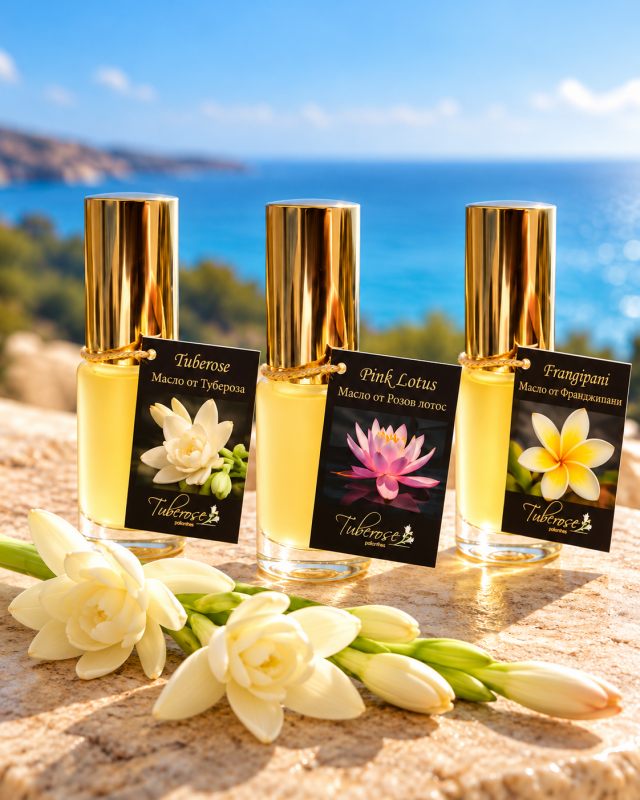
It is during this period that the aroma that underlies the natural oil of Tuberose Polianthes is revealed.
👉 https://tuberosepolianthes.com/produkti/kozmetika
September
Ripe bulbs
After flowering, the leaves continue to nourish the bulb.
❗ This is a crucial period for the formation of new bulbs and babies.
October
Removing the bulbs
After the leaves turn yellow:
The bulbs are removed
cleaned
dried in the shade
November - December
Storage and dormancy
The bulbs are stored:
dry
ventilated
free from moisture and frost
Frequently asked questions
When can Tuberose be planted?
From March to August 15, including staged planting for a longer flowering period.
Is starting fertilization mandatory?
Yes. Starting fertilization with tablets with a 6-month effect is key for strong plants and abundant flowering.
Can Tuberose bloom until December?
Yes, with later planting and pot cultivation in a warm place.
👉 Bulbs and Plants:
https://tuberosepolianthes.com/produkti/rasteniya
Conclusion
Tuberose Polyanthes is a plant with exceptional potential when the right timing, proper fertilization and staged planting are observed. By combining early awakening, starter fertilization and an extended planting period, flowering can last significantly longer than the standard season.
This calendar is designed as a basic expert guide that you can return to every year.